

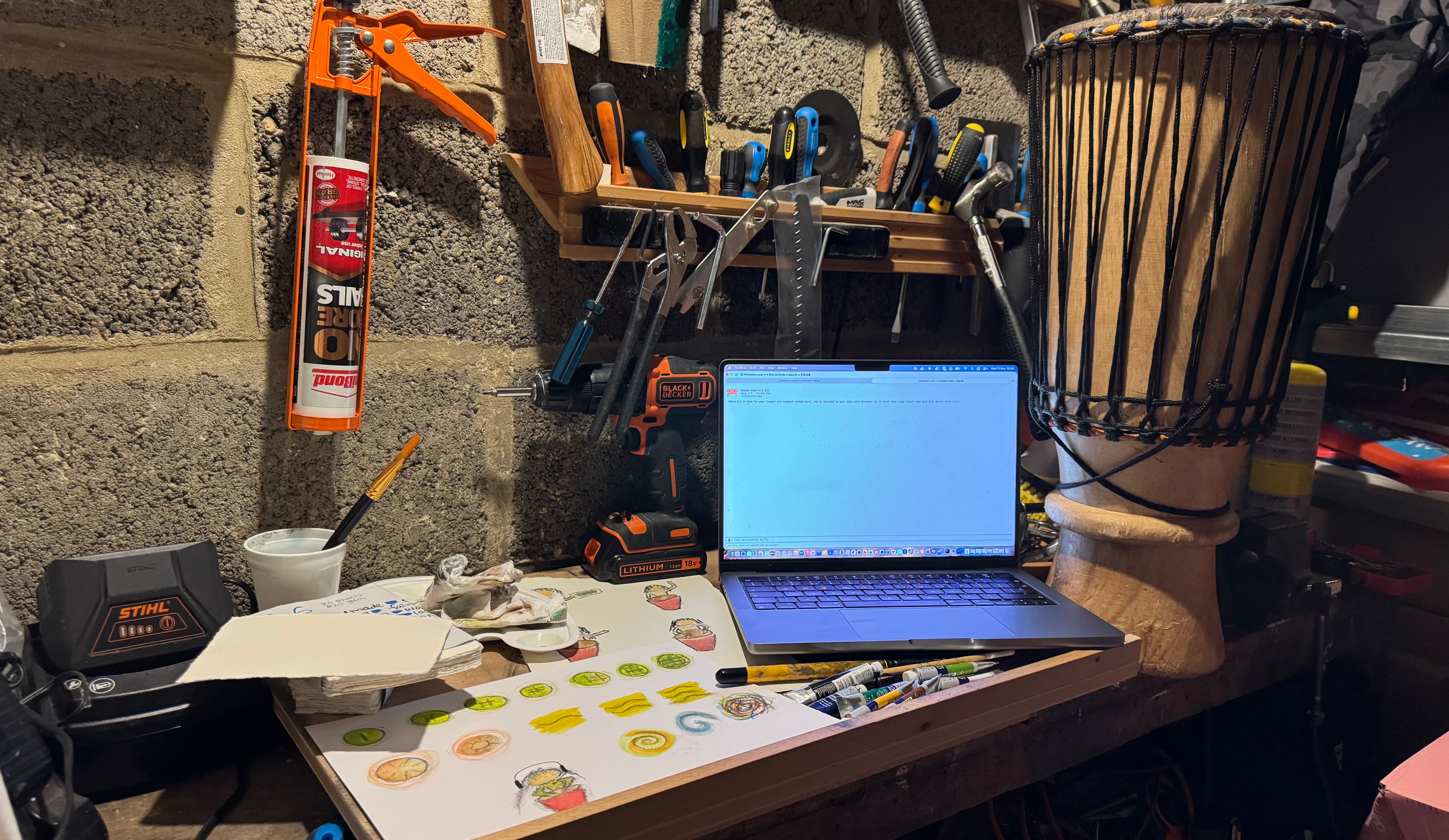
An unexpected consequence of the AI revolution is that I’ve been spending a lot of time in my garage painting drums, xylophones, and website buttons - while Claude runs in the background doing sound engineering. I’d like to think that as people in California fired up their racks of graphics cards to produce ever-advancing models, this scene in Wiltshire was exactly what they had in mind...
After a couple of decades in tech product delivery I’ve seen what it takes to build products. I used to joke that if you had any spare money lying around, the thing to do was build software. It was an enormously efficient way of burning through hundreds of thousands, if not millions, very quickly. Now it’s possible to create software in a matter of weeks, in a garage.
Everyone is now asking the same question: so what should we be building? It’s becoming less valuable to know how to manage software delivery, so where is the value now? That question has brought me to this little project.
This first product from Wild Humans Studio is based on a core ethos: humans are intrinsically wired to make music. Every society has some tradition of people joining in and singing, dancing, beating drums or playing instruments. There might have been skilled leaders bringing it all together, but everybody took part even just by clapping or stomping their feet. And this felt good. It was valuable. 100 years ago another new technology - sound recording - caused this to fade. Music became something you buy on wax cylinder and later subscribe to through your phone, rather than something you do. So it seems about time 100 years later that another technology could play a part in helping us to rediscover the enjoyment of making music as well as owning it.
Participating in music making is therefore the core ethos of Paper Drum. It’s a music-making website for people of any ability to make music individually and, eventually, together. At launch, it includes two compositions, and a variety of playable instruments, all sampled from real instruments that are relatively easy to get hold of and make a good sound on in real life (guides to getting hold of real instruments and using them with the app are on the backlog... For now, if you get a tongue drum, you want it in D major!)

I set up a studio in my back room and recorded a simple composition, layering drums and piano with a tongue drum I picked up at a music festival. I do the art, the composing, play the sounds, and write all of the words. I then recruited AI as my graphics designer, software engineer, sound engineer, and for a number of consulting roles. I arranged the music so that you could add to it, recorded the individual sounds of the instruments, and built something that, at its simplest, you can just noodle around with.
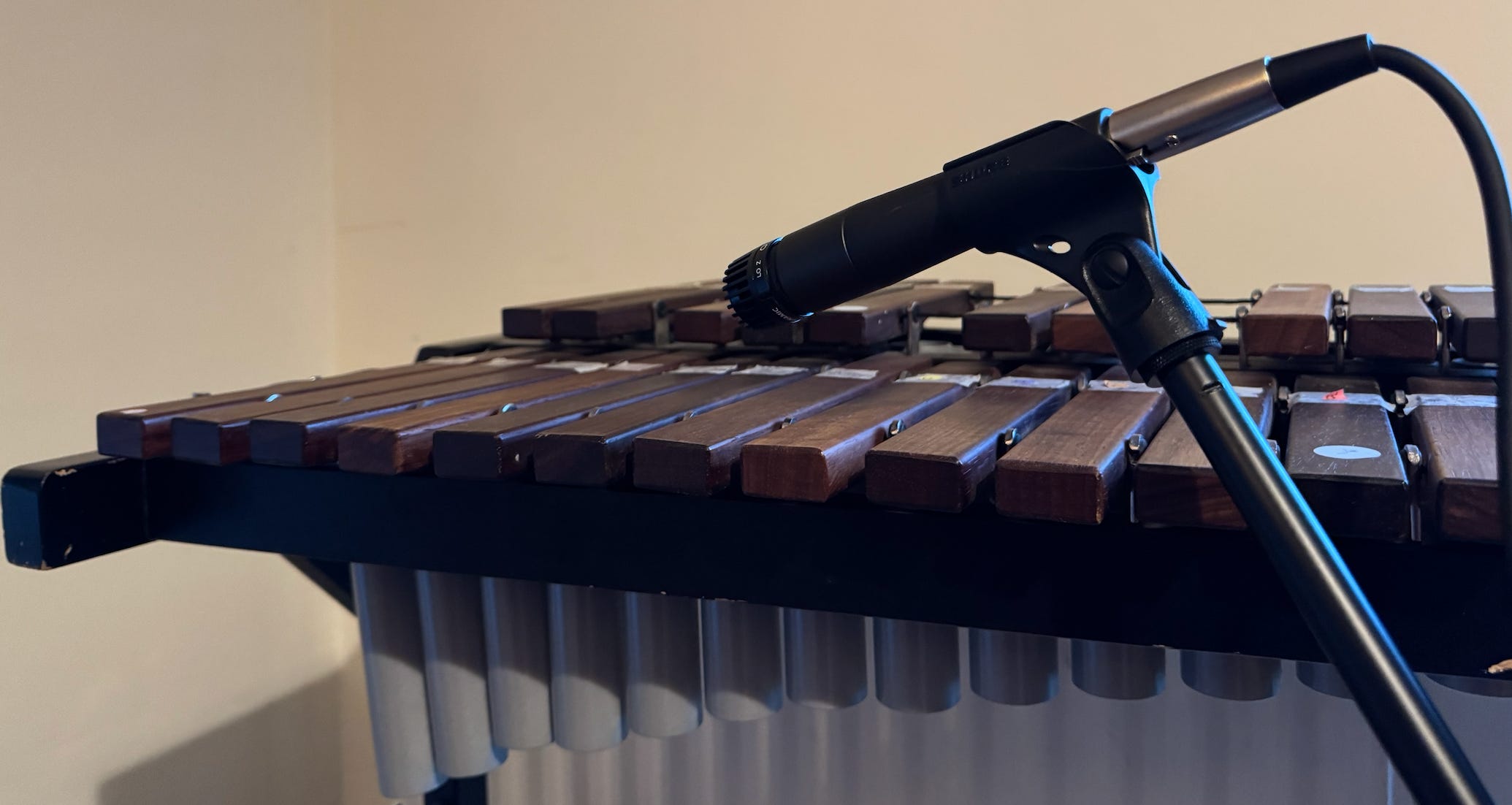
Then I did what most people wait too long to do, and I showed it to a handful of people: close friends, old work colleagues, family. The most notable feedback was that you arrive on the site and, not having been in my head for the three months it took to make, you just don’t know what to do. So I borrowed a drum circle tradition where a facilitator gets things going before stepping aside. The first thing you now see is a simple call and response: let me teach you a couple of rhythms.
That’s all I’ve got so far. This could be half a dozen different things, and I haven’t worked out which. Call it an alpha release. You can play along with it now, and any feedback will feed into where it goes. Paper Drum
If you subscribe, I can’t guarantee I’ll be posting every week. I don’t want to be drawn into the patterns of the attention economy. There might be long gaps, and there might be periods where things happen faster. I also have a day job. What I can say is that if you subscribe, you’ll hear what happens next.
Such an interesting concept - blending the proper human made aesthetic and heart with the tech whilst also maintaining the physicality of interacting…I look forward to seeing how it develops!